
How Mio measures your level, and what it does with it
Mio estimates your CEFR level after every answer with a rating system borrowed from chess, keeps one estimate per language, and uses it to choose what you practice next. Here is how each part works, in plain words.
- A1–C2the CEFR scale it measures
- ~25answers for the estimate to settle
- 1estimate per language
- 0seconds of your voice stored
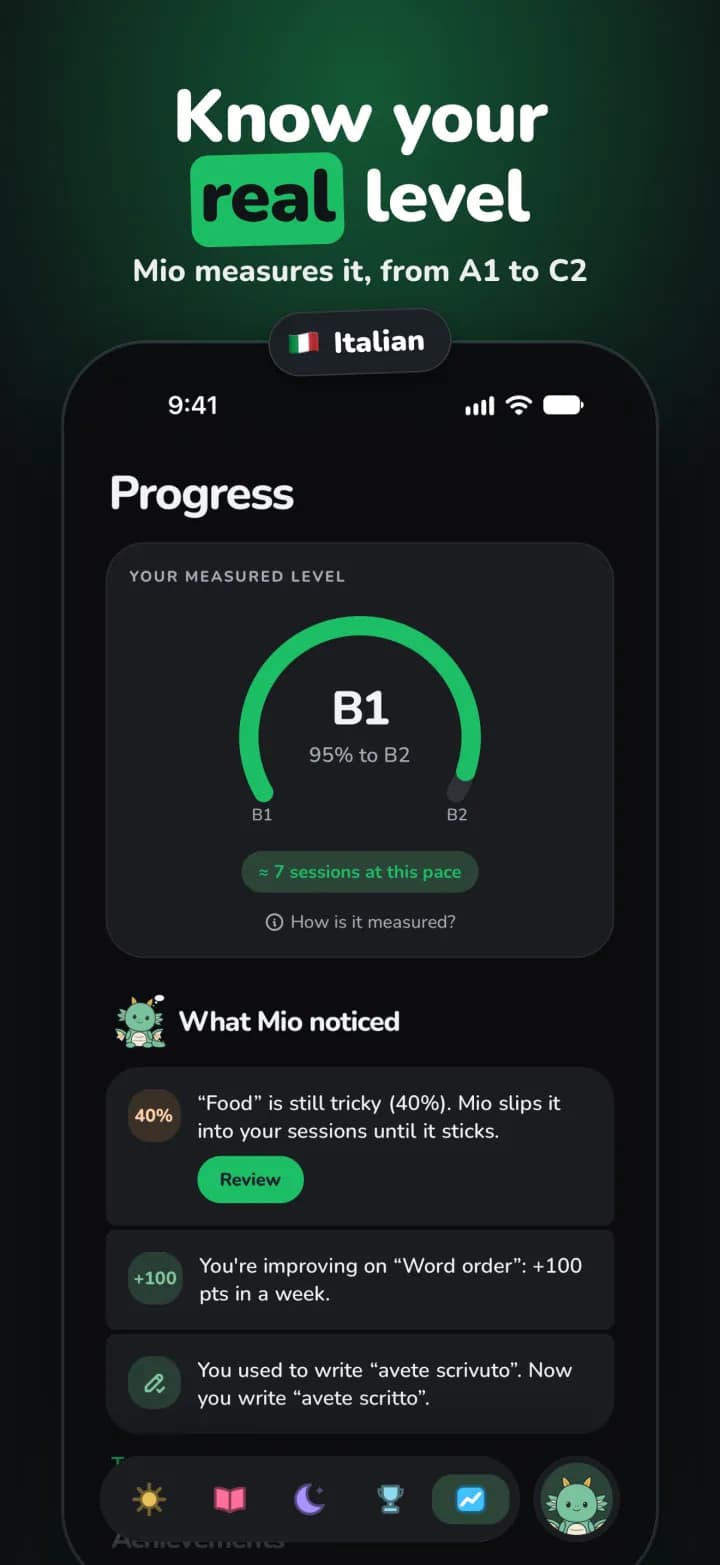
After each answer
expected = 1 / (1 + e^(−(level − difficulty) / 0.75))level ← level + step × (result − expected)Levels run from A1 = 0 to C2 = 5. The result is 1 when you're right, 0 when you're not. The step starts at 0.4 of a level and halves after 25 answers, so the estimate settles without freezing.
Your level, estimated like a chess rating
Mio keeps one number per language on the CEFR scale, from A1 to C2. After every answer, it compares what happened with what it expected: getting a question right above your level raises the estimate a lot, getting one wrong below your level lowers it a lot, and questions right at your level barely move it.
A question's difficulty comes from the topic it tests, picked from a closed list of grammar, vocabulary and skills topics, each with its own CEFR level, then nudged a little for easy and hard items.
The estimate moves fast at first and settles after about 20 to 30 answers. Mio only offers you the next level after at least 25 answers, once the estimate sits three quarters of a level above your current one and you have answered questions from that next level, so a lucky streak is not enough. XP counts your effort; your level only rises when you're right.
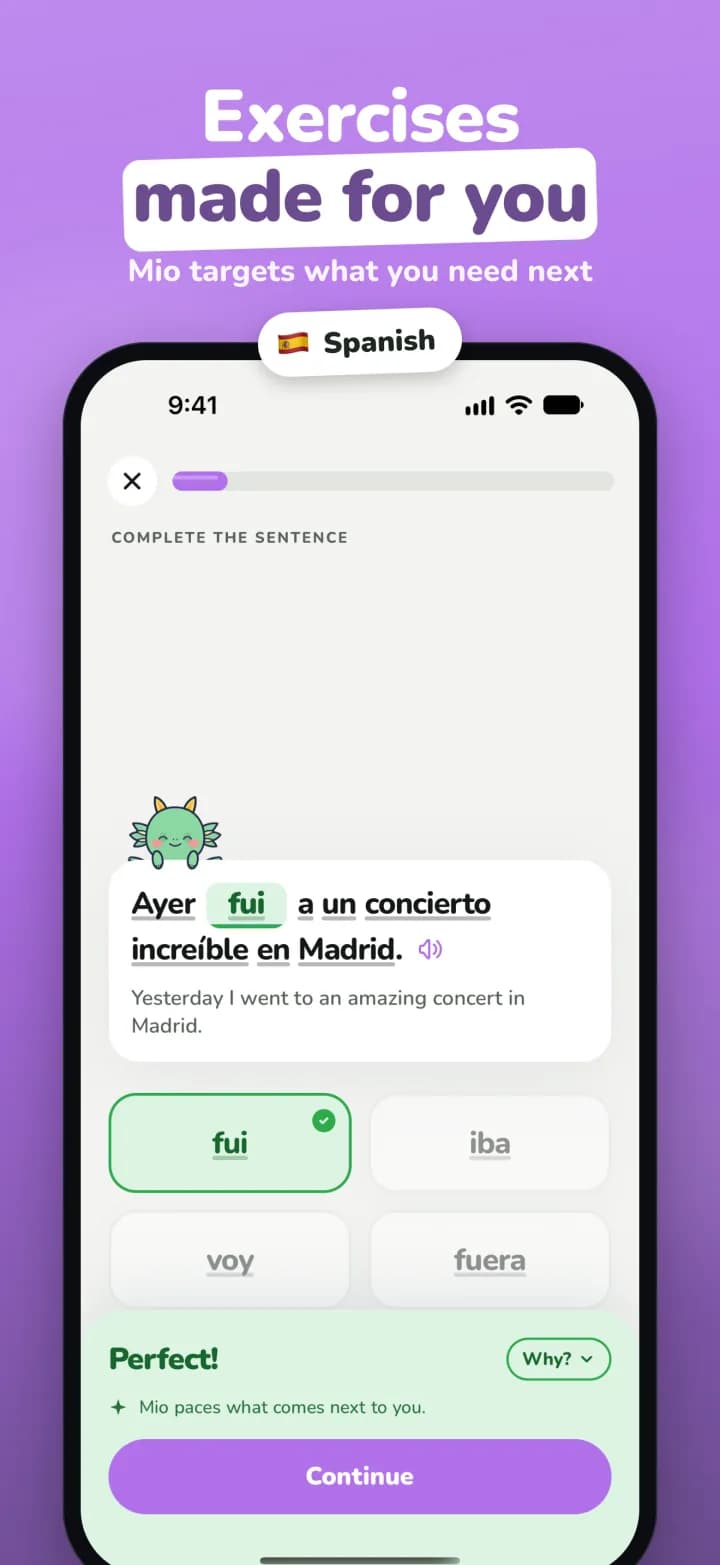
Practice picked from your weak topics
Every answer is filed under the topic it tests, so Mio knows, topic by topic, what you master and what still trips you up.
Your daily journey and your quizzes draw on your weakest topics first, and each stop says why it was chosen. Exercises are aimed at the band where you get about four answers in five right: hard enough to teach you something, easy enough to keep going.
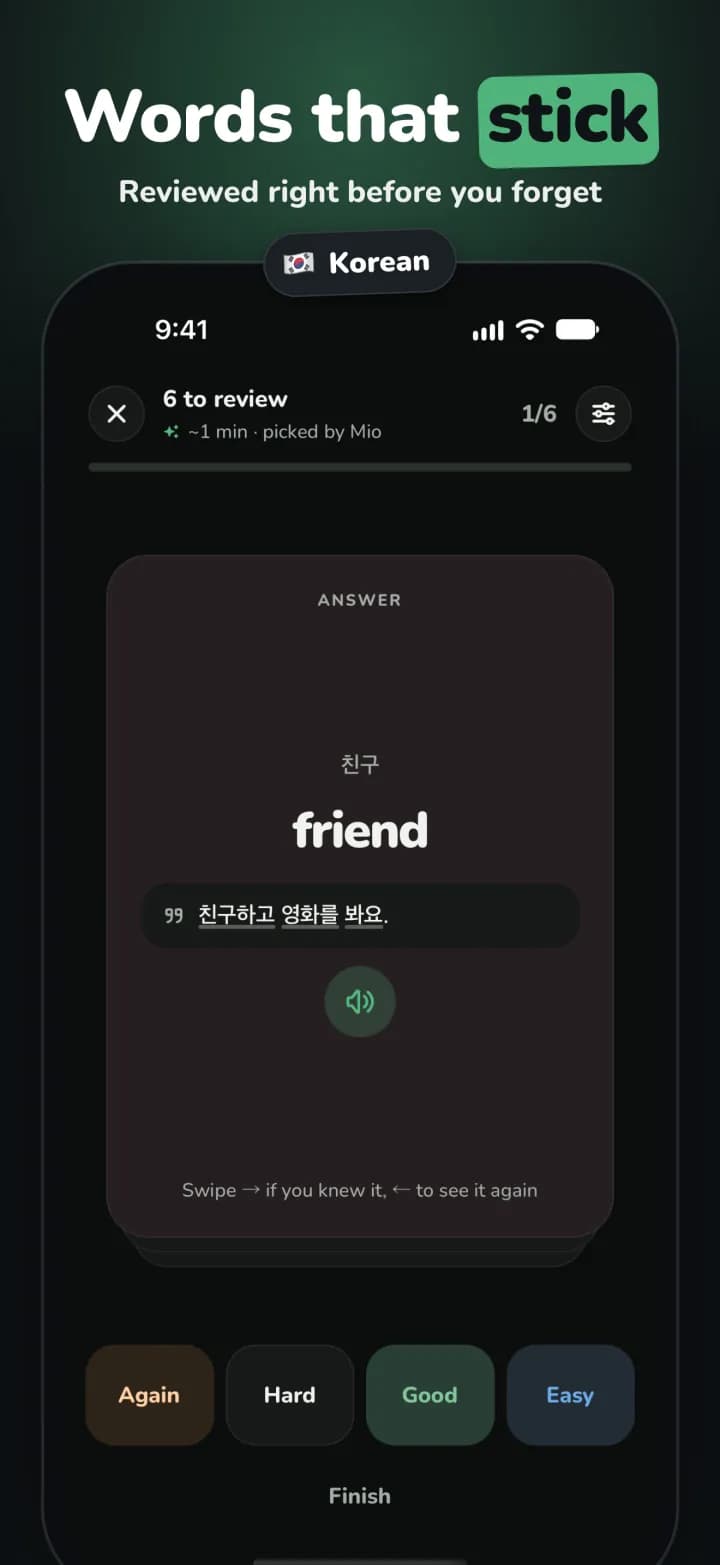
Flashcards on a spaced-repetition schedule
Each card's next review depends on how well you knew it. “Again” brings it back in the same session; “hard”, “good” and “easy” push it further out, by intervals that grow each time you remember it.
New cards ask you to recognise the word; once a card has held for three weeks, it mostly asks you to produce it. Every word you tap and keep, anywhere in the app, joins the same schedule.
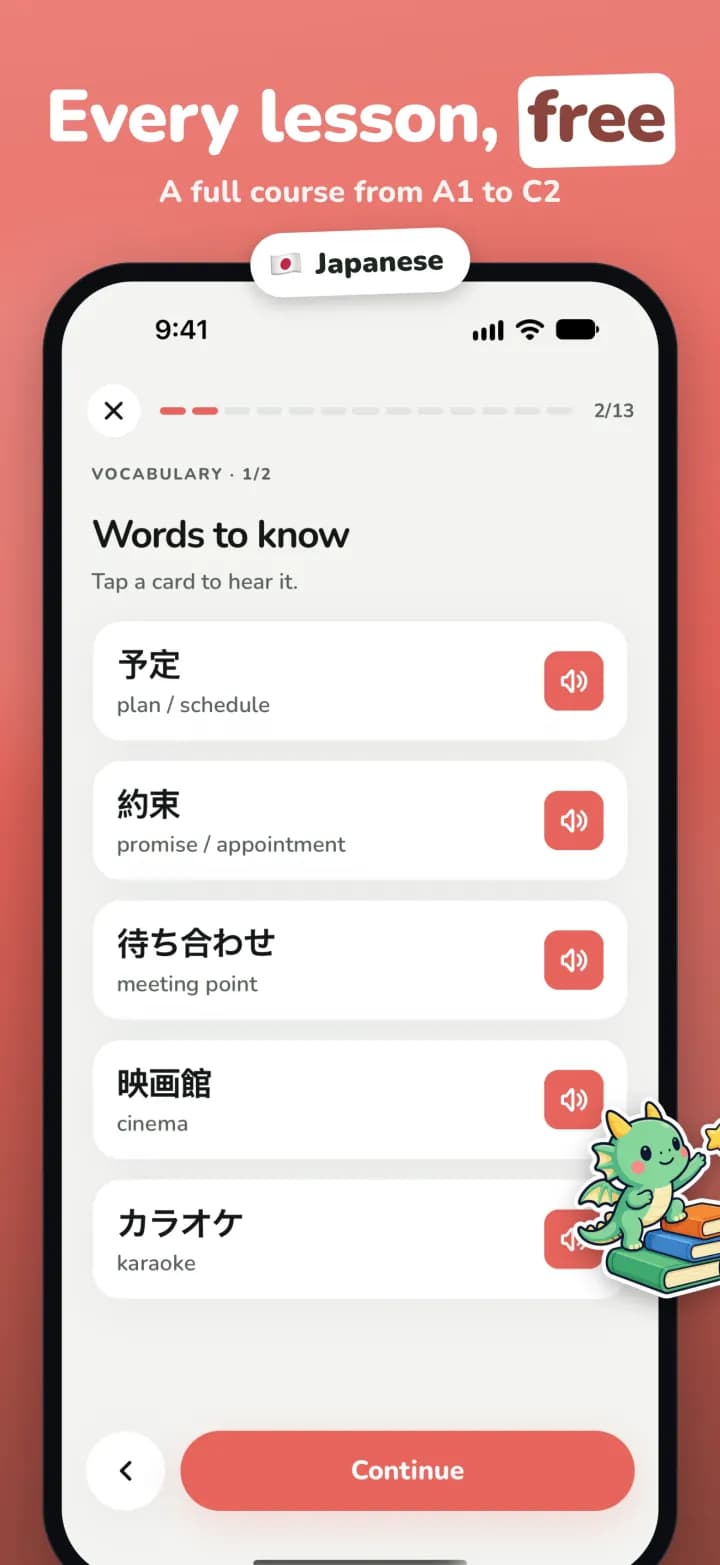
Lessons that follow the CEFR
About 190 lessons per language follow the Common European Framework of Reference, from A1 to C2. Each one teaches the words, the grammar point and the common mistakes of its level, then checks them with a short quiz.
The whole course is free, in the app and on this website, where every lesson can be read without an account.
Read the free lessons ›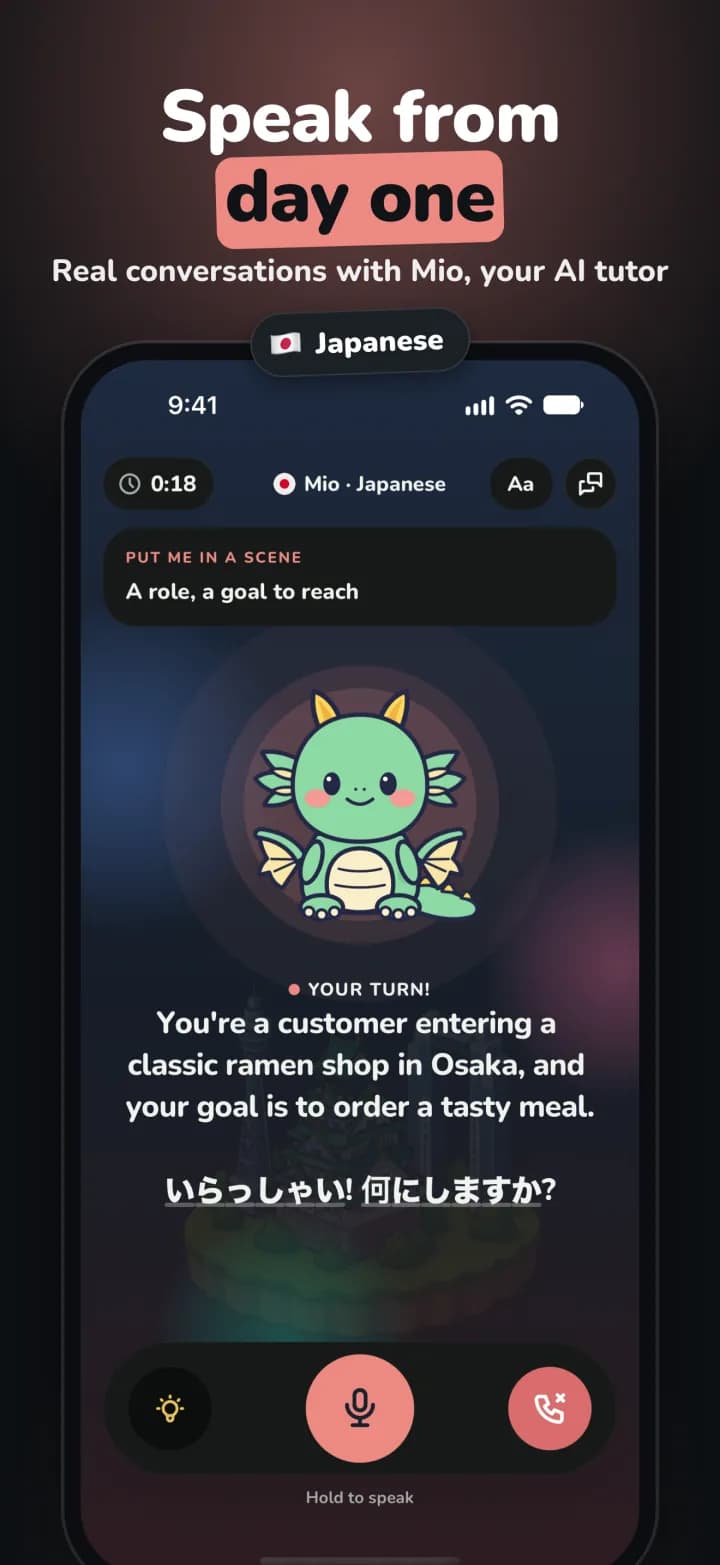
Live voice conversations
Talk runs on Google's Gemini Live API: you speak, and Mio answers out loud a moment later, at your level, correcting you inside the conversation rather than after it.
Your audio is analysed in real time and never stored; only aggregate figures, such as the length of a call, are kept to adapt your practice.
See Talk and every other feature ›What Mio is not
- Not a human teacher: Mio is an AI tutor, and it can get things wrong. The lessons and the measured level are there to keep you on solid ground.
- Not an offline app: exercises, stories and conversations are made live for your level, so Mio needs a connection.
- Not an exam: the measured level is an estimate from your answers in the app, not an official CEFR certificate.
Last updated: November 2026.
Find out your real level
Mio is free on the App Store and Google Play: your first answers already move the estimate.